 English
 हespañol
 русский
 Le français
 Deutsch
 Türkçe

What is Islam?
“Islam” is an Arabic word meaning peace and submission. A practicing Muslim strives to submit whole-heartedly to God, thereby achieving peace in this life as well as in the afterlife. “Mohammedanism” is a misnomer for Islam and offends its very spirit and message.
Islam is the last of the three Abrahamic religions preceded by Judaism and Christianity. As such, it is a religion based on revelation that mentions belief in One God and the guidance revealed by God to the prophets. The prophets of Islam include Abraham, Moses, Solomon, and Jesus: hence Islam is not a new religion but the final culmination and fulfillment of the same basic truth revealed by God through all His prophets to every nation (Al-i 'Imran, 3/84).
Around the year 610 AD, a man named Muhammad was spending time alone in the cave of Hira where he regularly retreated from the hustle and bustle of the busy trading town of Mecca in order to contemplate on the mysteries of life. Muhammad was known as “the trustworthy” amongst his friends and family as he was always sincere and honest in his dealings with others. It was towards the end of the lunar month of Ramadan, during the night that is now known and celebrated as the Night of Qadr, when the revelations of the Qur’an began to be transmitted through Archangel Gabriel to Prophet Muhammad (peace be upon him). He continued to receive these revelations for twenty-three years. The verses were memorized and written down by the companions and followers of the Prophet Muhammad, and is the same Book (the Qur’an) that Muslims read today.
In addition to the Qur’an, Muslims have the recordings of the Prophet’s lifetime and practices (Sunnah). This includes such things as the manner of praying and ablution, the details on how to perform the pilgrimage, and many other practices that illustrate the belief in one God. There are also the sayings and acts of the Prophet as witnessed by the people of the time that have been transmitted and recorded. These are known as hadith and serve as a guide on how to live the religion of Islam.
What do Muslims Believe in?
 1.) One God: Muslims believe in the One, Unique, Incomparable, Merciful God, the Sole Creator, Sustainer and Cherisher of the Universe. Muslims prefer to use the Arabic name for God, “Allah”, because it has no plural, feminine or diminutive that could be associated with idolatry (i.e. gods, goddesses or semi-gods).
 2.) The Angels: Muslims believe that Allah created the angels such that they cannot commit sins nor do they have gender.
3.) The Prophets: With the belief that Allah sent His messengers and prophets to all people, Muslims faithfully accept Biblical prophets, also mentioned in the Qur’an, including Adam, Ishmael, Isaac, Moses, David, and Jesus (peace be upon them all). All prophets were human beings like us who, as chosen examples for their people, committed no grave sin. Muslims accept Jesus as a prophet, believe in his virgin birth, and pay utmost respect to him. His name (Isa) is mentioned in the Qur’an almost a hundred times.
4.) The Books: To believe in the Holy Books of Allah that were sent before the Qur’an and in the Qur’an as the final words from Allah is a pillar of the Muslim faith. The Qur’an was revealed to the last prophet, Muhammad, through the Archangel Gabriel. It confirmed and finalized all previous revelations that were sent to humankind through Allah’s messengers. The Qur’an is a miracle in many ways including that its meanings still apply in modern times.
5.) Predestination and Divine Decree: A Muslim believes in the predestination (al-qadr), which relates to the ultimate power of Allah. It means Allah is the Omniscient, Omnipotent, and Omnipresent. He has knowledge and power to execute His plans. Allah is not indifferent to this world. Allah is the Wise, Just, and Loving, and whatever He does has wisdom though we may sometimes fail to fully comprehend it.
6.) Resurrection: The following verse explains the significance of believing in the principles of faith including the Last Day: “It is not righteousness that you turn your faces towards east or west; but it is righteousness to believe in Allah and the Last Day, and the Angels, and the Book, and the Messengers; to spend of your substance, out of love for Him, for your kin, for orphans, for the needy, for the wayfarer, for those who ask, and for the ransom of slaves; to be steadfast in prayer, and practice regular charity; to fulfill the contracts which you have made; and to be firm and patient, in pain (or suffering) and adversity, and throughout all periods of panic. Such are the people of truth, the Allah-fearing.” (Baqarah, 2/177).
What are the Five Pillars of Islam?
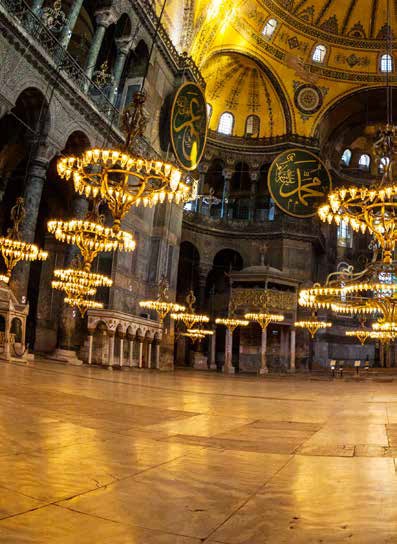
1.) Shahadah (Testimony): There are five pillars of Islam, the first being the declaration of faith, the shahadah, a simple formula that all the faithful pronounce: “There is no god but Allah, and Muhammad is the servant and Messenger of Allah.” These words are to be uttered with sincere conviction and under no coercion. The significance of this testimony is the belief that the only purpose of life is to serve and obey God, and this is achieved through following the example of Prophet Muhammad, the messenger to all human beings until the Day of Judgment. Anyone who declares the shahadah is a Muslim even if s/he does not observe other duties required from Muslims in Islam.
2.) Salah (Five Daily Prayers): Daily prayers are offered five times a day as a duty towards Allah. They strengthen and enhance the belief in Allah and inspire man to a higher morality. Salah purifies the heart and prevents temptation towards wrongdoings and evils. Male Muslims are greatly encouraged to perform their five daily prayers in the mosque in congregation. Female Muslims are free to pray where it is most convenient.
3.) Sawm (Fasting): Muslims keep Ramadan, the fasting month, not only by abstaining from food, drink, and marital intercourse from dawn to sunset but also from evil intentions and desires. It teaches love, sincerity, and devotion. It develops a sound social conscience, patience, unselfishness, and will power. It also helps the wealthy to understand the difficulties of those who suffer from hunger.
4.) Zakah (Purification of Wealth): Islamic worship is not limited to the spiritual realm alone. Material obligations apply to those who can afford. Zakah is the annual payment of 2.5% of one’s net savings and commercial assets held for a year as a religious duty and a purification of one’s wealth. The sum is to be spent directly on poorer sections of the community. Muslims are required to help the poor, orphans, and the needy by providing them with at least a fixed amount of money in order to facilitate their lives in an attempt to get rid of inequality. Islam always encourages Muslims to share their material opportunities with those less fortunate. The minimum of this sharing is to give zakah.
5.) Hajj (Pilgrimage to Mecca): This duty is to be performed once in a lifetime provided that one has the health conditions and financial means to do so. Over the last 1,400 years, the Islamic miracle of real brotherhood of all races and nations has been seen in action as Muslims gather for pilgrimage, Hajj, annually in the sacred city of Mecca where the House of Allah, the Ka’bah, is located. As the only pilgrimage site and the direction to be faced for the five daily prayers, the Ka’bah, an ancient cubic shaped building dating from Abraham’s time, is now circumambulated by around three million Muslims each year, all in white gowns, during the Hajj period.
These are the ritual obligations of Islam, each of which has an inner spiritual effect for the sincere ones: therefore, faith and sincerity are essential components of these acts. In addition to these ritual obligations, Muslims make personal prayers known as dua.
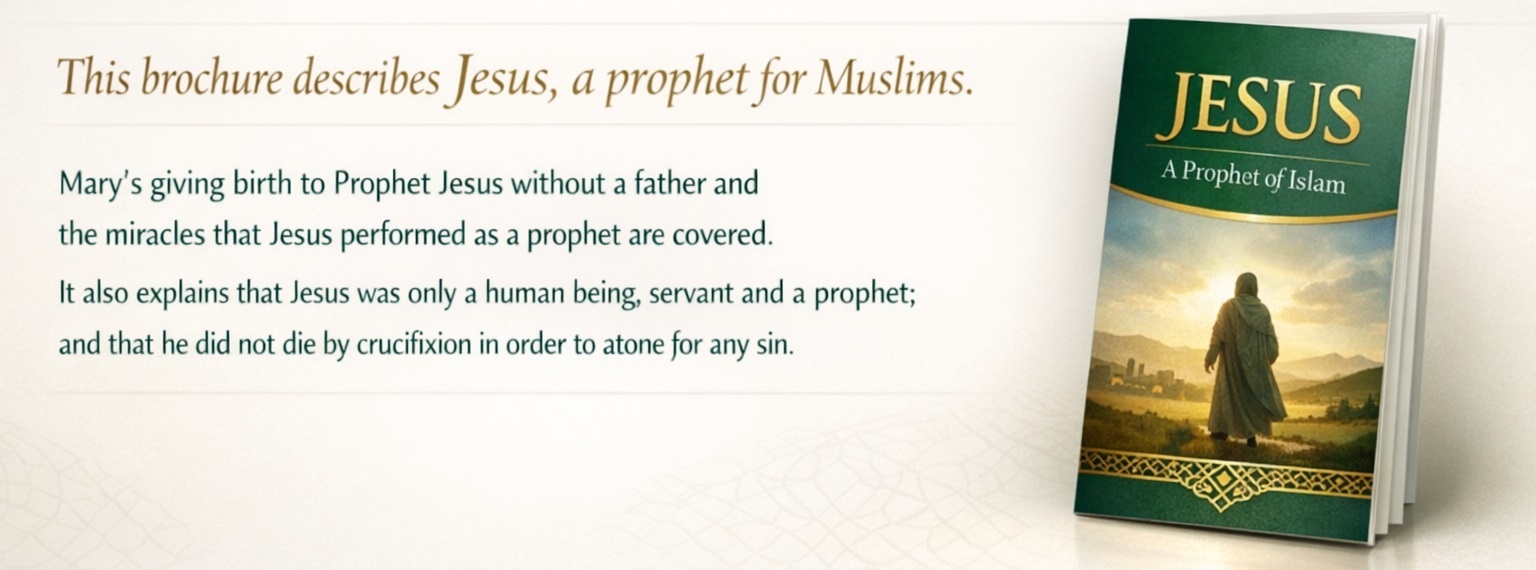
Salvation in Islam
Mosque
The mosque, in its most basic form, is simply a clean area designated for prayers. Mosques throughout the world have taken on various architectural forms reflecting local cultures. They range from detached pavilions in China and elaborate courtyards in India to massive domes in Turkey and glass and steel structures in the United States.
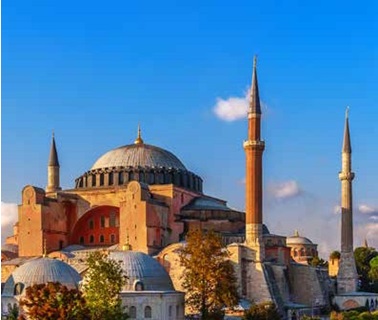
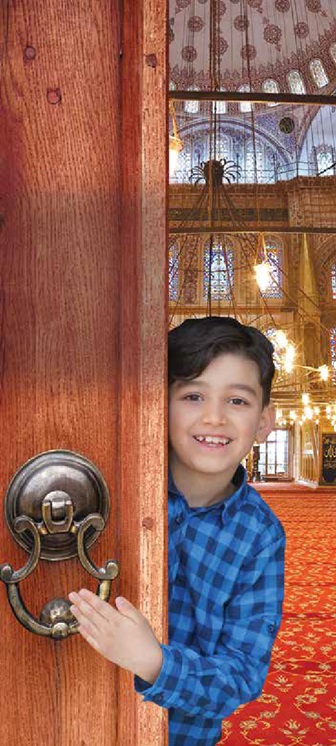
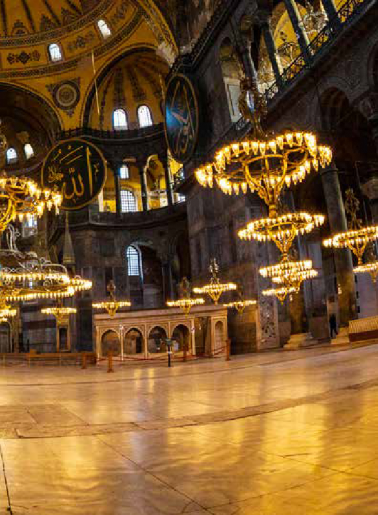
As you walk into a mosque, you may be impressed by the architecture and the calligraphic decoration based on the Arabic script or by the lighting and the spaciousness of this place where Muslims have gathered for centuries for the five daily prayers and other religious services. The Friday prayer, the one that is optional for women and obligatory for men to perform in the mosque, is a weekly congregational prayer which includes a sermon (khutbah) by the imam addressing social issues as well as directing Muslims to a virtuous life. The imam, for example, recites the following verse from the Qur’an at the end of sermons: “Surely Allah enjoins the doing of justice and the doing of good (to others) and the giving to the kinsfolk, and He forbids indecency and evil and rebellion; He admonishes you that you may be mindful.” (Nahl, 16/90)
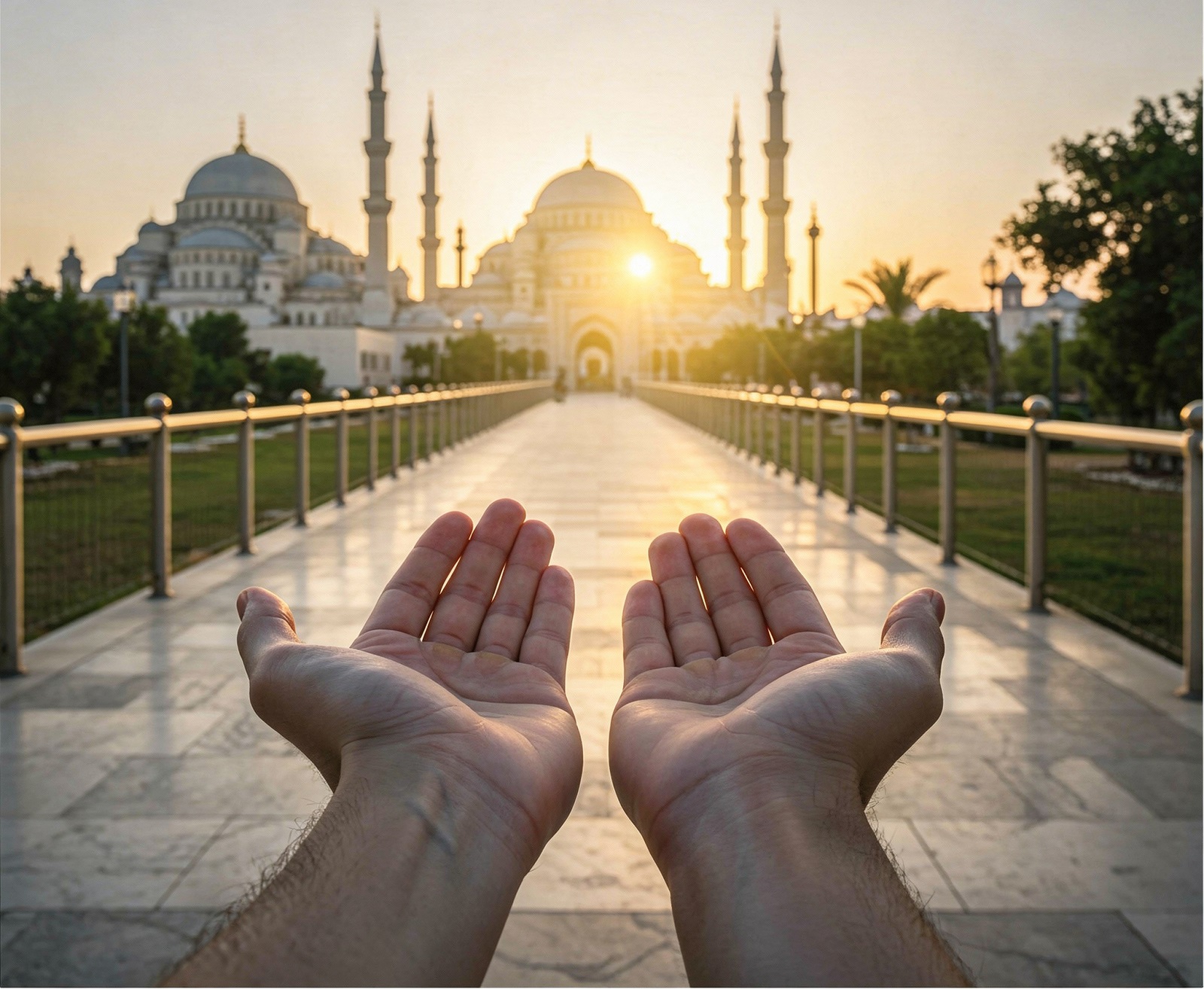
In Islam, it is not necessary to be in a mosque to pray since God is not confined to a building, as Prophet Muhammad said, “The whole earth is a mosque.” Having said this, a traditional mosque consists of a domed building and a minaret from where the call to prayer is performed. There is no altar, just the simple space to pray together and often a mihrab (niche) to indicate the direction of Mecca which Muslims face to for their prayers.
Prayer and the Call to Prayer
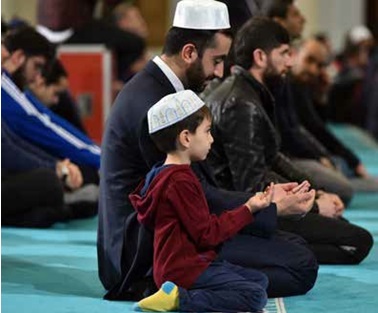 The five daily prayers performed by Muslims are central to the practice of Islam. After performing ablutions, a physical preparation in which parts of the body such as the face, arms and feet are washed, the prayer begins and includes set movements and recitations from the Qur’an in its original form of Arabic. One cycle of prayer is called a rakah, and varying numbers of rakah are performed for each of the prayer times.
Prayer in Islam involves the body, mind, and soul in an act of remembrance and surrender amidst the business of everyday affairs. It is a few minutes apart from the concerns of everyday worldly life that can infuse other activities with a sense of peace and purpose. As for the congregational setting of prayer, Muslims stand in line shoulder to shoulder which symbolizes the equality of all believers.
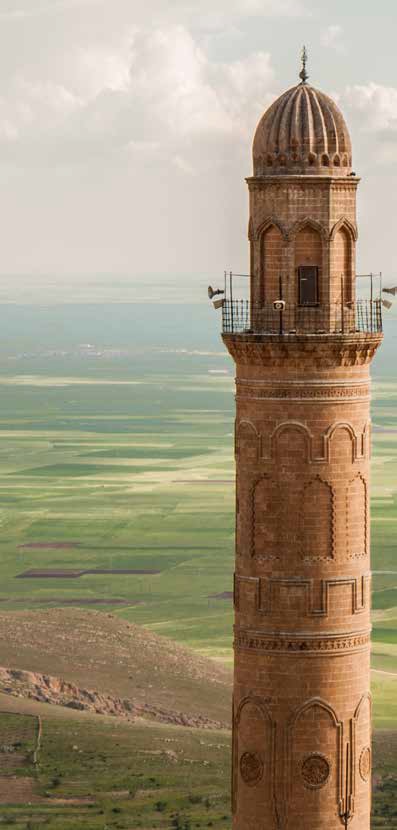
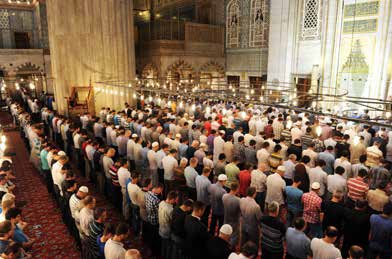 The timing of the prayers is calculated according to the movement of the sun: for example, the noon prayer time begins when the sun has just passed its zenith at one’s location. Therefore, the timing for these prayers change with the change of seasons in accordance to where one is located on the globe. Thus, there is not even a single moment without a prayer being made throughout the world. To remind people of the prayer times, the call to prayer (adhan) is recited in Arabic aired from the minaret. This is done by the muazzin who is chosen for the task based on recitation skills and good character. The very first muazzin was Bilal, an Ethiopian Muslim, a companion to the Prophet Muhammad who was known for his beautiful voice.
Translation of the Call to Prayer
Allah is the Greatest,
Allah is the Greatest.
Allah is the Greatest,
Allah is the Greatest.
I testify that there is no god but Allah.
I testify that there is no god but Allah.
I testify that Muhammad is the Messenger of Allah.
I testify that Muhammad is the Messenger of Allah.
Come to prayer!
Come to prayer!
Come to salvation!
Come to salvation!
Allah is the Greatest!
Allah is the Greatest!
There is no god but Allah.
The cycle of the prayer times, which are based on the rhythms of the natural world, provide a framework for living and a foundation for those moments in life that occasionally lift us out of this time/space continuum and allow us to draw close to the Divine Being.
You can view the relevant PDF file by clicking on the book images in the library below 2 or 3 times.

Comments
İslam bu dünyanın da insanın başına gelecek en güzel şey
Add New Comment